Motorcycle dealers and brands win riders online by publishing content written by people who actually ride, keeping model and inventory pages crawlable after bikes sell, and building enough third-party authority that AI tools trust them as a source. SEO earns the rankings, GEO (generative engine optimization) makes your expertise easy for AI to quote, and digital PR earns the outside coverage AI looks for before it recommends anyone.
That verdict comes from both sides of the industry. I spent 12 years as an online motorcycle editor, have written more than 10,000 motorcycle-industry articles, and still freelance for motorcycle publications. On the agency side, our team has built campaigns for Ducati, Piaggio Group (Vespa, Aprilia and Moto Guzzi), Touratech-USA and Bridgestone USA, and created global marketing strategies for the Suzuki GSX-8R launch in America. Today we run organic growth for KTM World, Twisted Road and Electric Cycle Rider.
This guide covers what changed in how riders shop, why most dealer websites are invisible to AI, seven tactics that work, how to plan around the riding season, and how to measure results in revenue rather than rankings.
How Do Riders Research Motorcycles and Dealers Now?
Riders research harder than almost any other vehicle buyer, and AI has added a new first step. Before a rider walks in, books a rental or orders tires, they have usually compared models, read owner reviews, watched videos and, increasingly, asked an AI assistant to narrow the field.
There isn’t yet a large public study of motorcycle shoppers and AI, so the closest benchmark is the car market, which shares the same dealer model and much of the same buyer psychology:
Now layer on the motorcycle market itself. New-bike demand softened across the U.S. in 2025, and even the category’s biggest name felt it: Harley-Davidson reported North American retail sales down 13% for the year (Harley-Davidson FY2025 results). A tighter market means every rider who is shopping matters more, and the dealers and brands that show up during research win a larger share of it.
Why Are Most Dealer Websites Invisible to AI?
Most dealer websites run on the same platform templates, carry the same OEM copy, and delete pages the moment a bike sells. To Google and AI tools, that looks like thousands of near-identical pages with nothing original to say.
These are the problems I find on almost every powersports dealer audit:
Source for the mentions figure: Ahrefs study of 75,000 brands. The same study found YouTube mentions had the strongest correlation of any factor (about 0.737), which matters in an industry where riders live on YouTube.
What Are 7 Organic Growth Tactics That Work for Motorcycle Businesses?
These are the tactics behind the growth our current motorcycle clients have seen. KTM World and Twisted Road have each more than doubled qualified organic traffic and grown organic revenue 3X or more using the approach below.
- Rider-tested comparisons. Honest model-versus-model content written by people who have ridden both. “890 Adventure R vs. Ténéré 700” written from the saddle beats any spec-sheet roundup, and it’s exactly the kind of question riders now put to AI.
- Evergreen model hubs. One durable page per model family, updated each model year, that links to whatever is currently in stock. It collects links and rankings for years instead of weeks.
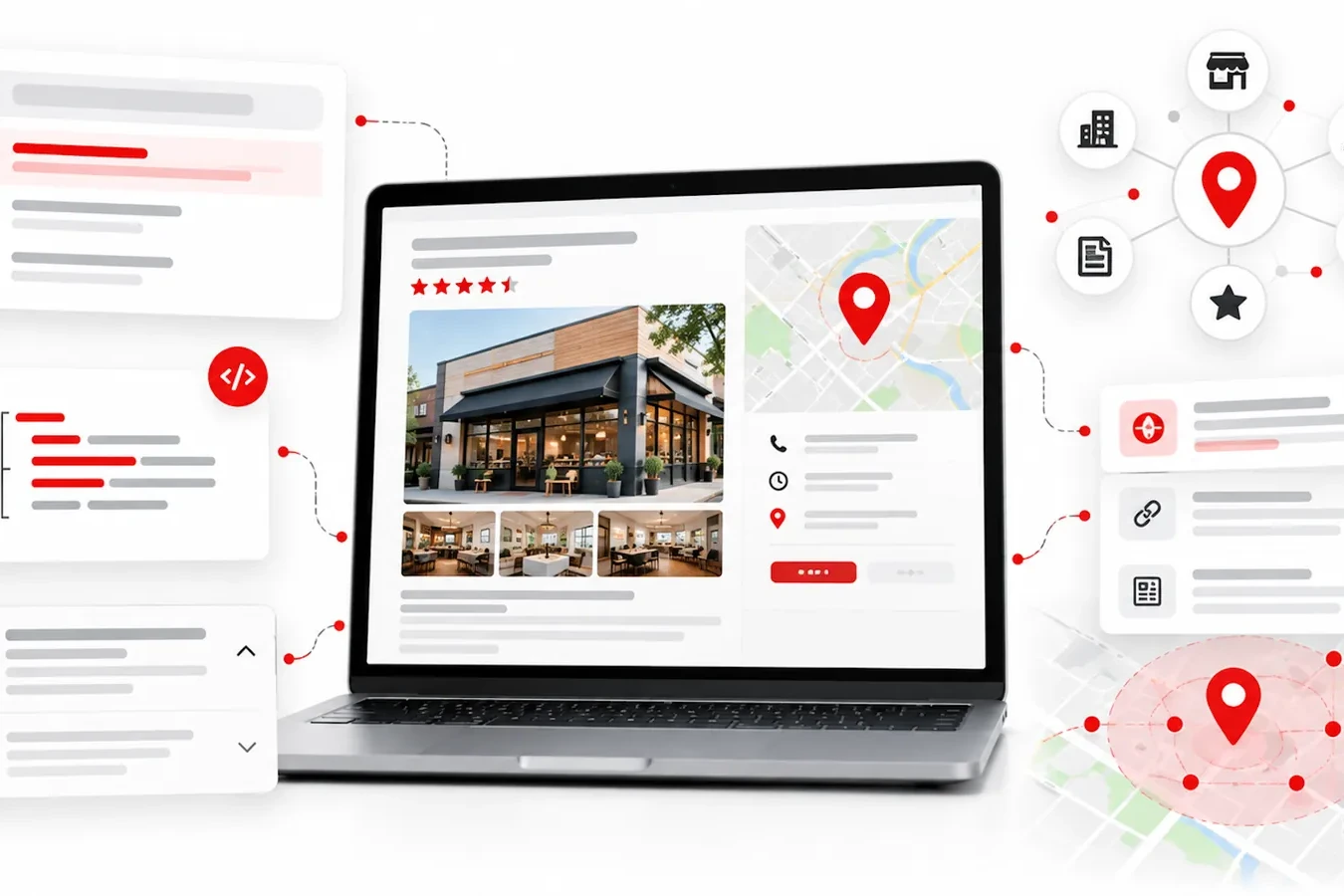
- Service, parts and accessories pages. Separate pages for the jobs riders search for, each matched to a complete Google Business Profile with the right categories, hours and photos. For AI in Google’s products, the profile is the source of choice: BrightLocal found Google Business Profile made up 28.5% of all local AI citations (BrightLocal).
- A seasonal content calendar. Publish two to three months before demand peaks (see the calendar below), so pages have time to rank before riders start searching.
- Structured data. Product, Vehicle, LocalBusiness and FAQPage schema help search engines and AI read model details, pricing, location and answers without guessing.
- Named expertise. Real authors with real riding and industry credentials on every guide. When I added a proper author tag and author page to my own work, my content began appearing in ChatGPT and Google’s AI answers. Riders can tell when a writer has never ridden, and so can quality systems built to reward first-hand experience.
- Digital PR in motorcycle media. Expert quotes, product news and event coverage in the publications riders read. Muck Rack’s analysis of more than 25 million AI-cited links found earned media drives 84% of AI citations, while paid content drives just 0.3% (Muck Rack, May 2026).
How Does the Strategy Differ for Dealers, OEMs, Aftermarket Brands and Rentals?
The fundamentals are the same, but each type of motorcycle business wins different searches. Building the wrong kind of content is one of the most common ways budgets get wasted.
Aftermarket brands sit closest to classic ecommerce SEO. Our work for RealTruck in the adjacent automotive aftermarket, documented in our aftermarket auto parts case study, shows how content built around specific vehicles and products added more than $1 million in revenue in three quarters. Rental platforms like Twisted Road, on the other hand, win on city pages, rider trust and travel intent, which looks far more like local and travel SEO than dealer SEO.
How Should You Plan Content Around the Riding Season?
Publish ahead of demand, not during it. A page needs time to get crawled, earn links and climb, so content timed to the peak usually arrives too late.
Electric is worth its own line. Brands like Electric Cycle Rider sell to riders asking very specific questions about range, charging, trail access and maintenance. Those long, detailed questions are exactly what riders type into AI tools, and few competitors have answered them well yet.
What Does Success Look Like, and How Do You Measure It?
Measure organic revenue, leads and qualified traffic, not just rankings. A dealer can rank for hundreds of keywords and sell nothing if those keywords don’t match how riders buy.
For context, Ahrefs found only 38% of pages cited in Google’s AI Overviews also rank in the top 10 (Ahrefs, 863K SERPs). Rankings help, but AI often pulls from deeper, more specific pages. That’s another reason detailed, rider-tested content outperforms generic pages.
If you run a dealership, OEM, aftermarket brand or rental platform, our Motorcycle SEO, GEO & Digital PR program pairs this playbook with people who have spent their careers in the industry. Start with a free audit and we’ll show you where riders are finding your competitors instead of you.
FAQs
What is motorcycle dealer SEO?
Motorcycle dealer SEO is the work of ranking a dealership’s website and Google Business Profile for the searches riders make before they buy or book: new and used models, “dealer near me,” service, parts and financing. It covers technical fixes for inventory pages, model and location content, reviews and local listings.
How do riders use AI to choose a motorcycle or dealer?
Riders ask AI tools to compare models, recommend gear and tires, plan routes and find dealers, rentals or service shops. In the closest comparable market, Cox Automotive found 25% of new-vehicle buyers used AI while shopping and 63% of shoppers plan to use it next time.
Why don’t OEM model descriptions rank?
Copy-paste OEM descriptions appear on hundreds of dealer sites, so search engines have little reason to rank any single copy. Original, rider-tested content and real local details give Google and AI tools a reason to choose your page.
Does a motorcycle dealer need digital PR?
Yes, if it wants AI visibility. Muck Rack found earned media drives 84% of AI citations, and Ahrefs found branded web mentions correlate strongly with AI visibility. Coverage in motorcycle media gives AI independent confirmation of your expertise.
When should motorcycle businesses publish seasonal content?
Two to three months before demand peaks: buying guides from November to January, launch content before model-year reveals, event content six to eight weeks before major rallies, and storage and off-season content from August to October.
What results can motorcycle businesses expect from organic marketing?
It depends on the starting point and market. ContentMender’s current motorcycle clients KTM World and Twisted Road have each more than doubled qualified organic traffic and grown organic revenue 3X or more.
Last updated on October 29th, 2026 at 08:34 pm