Home service companies get recommended by ChatGPT, Gemini and Google’s AI when those tools can verify three things from multiple sources: what you do, where you do it, and whether real customers and trusted publications vouch for you. That evidence lives in your Google Business Profile, your service-and-city pages, your reviews across several platforms, and mentions of your company in local and national media. SEO, GEO and digital PR are the three disciplines that build it.
That is the short answer after 17-plus years running content and search programs, including nine years running organic lead generation for The Pest Rangers, a family-owned home service company in Northeast Pennsylvania we’ve worked with since 2017. The tactics that win AI recommendations are not new tricks. They are the fundamentals of local search, held to a much higher standard, because an AI answer usually names three or four companies instead of showing ten blue links.
This guide covers how homeowners find contractors now, where AI tools pull their information from, the seven signals that decide who gets named, and a 90-day plan for HVAC, plumbing, roofing, electrical, pest control and other home service companies. Every statistic links to its source.
How Are Homeowners Finding Contractors in 2026?
Google still starts most searches, but AI has become a real second step in the buying journey. Homeowners now cross-check what an AI tool tells them against Google, reviews and your website before they call.
The numbers moved faster in the last 12 months than at any point I can remember:
The takeaway is not that Google matters less. It’s that the homeowner now gets a shortlist from AI, then verifies it on Google. If you are missing from the shortlist, you never get verified. If you are on the shortlist but your Google presence is weak, you lose the call anyway.
For traditional “near me” searches, the Map Pack is still the main battlefield. Whitespark’s research found AI Overviews appeared on just 15% of local-intent queries, while Local Packs appeared on 93% (via Entrepreneur). Winning the Map Pack and winning AI answers are two halves of the same job.
Where Do AI Tools Get Their Information About Local Contractors?
AI tools assemble their answers from your Google Business Profile, major directories, your own website and third-party coverage. Which source matters most depends on the platform.
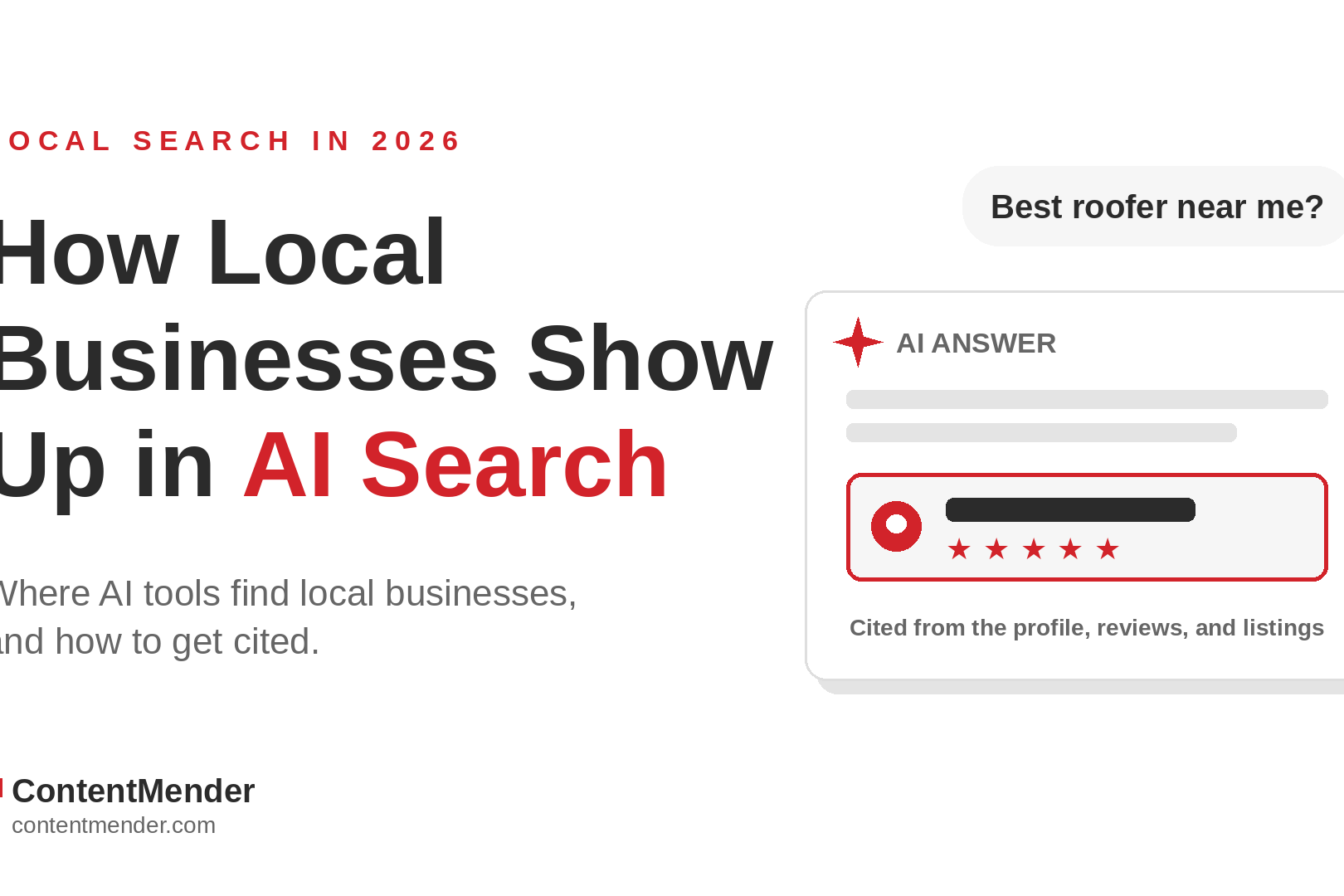
BrightLocal ran 60,970 checks across 1,355 business locations in Google AI Overviews, Google AI Mode and ChatGPT to see which sources AI cited for local businesses (BrightLocal, August 2026). The headline findings:
- Google Business Profile made up 28.5% of all citations and was used for virtually every location in Google’s AI products.
- Yelp made up 8.53% of citations and was the most-used source in ChatGPT.
- BBB, Angi and MapQuest were cited regularly, along with industry-specific directories.
- Business websites accounted for about 93% of all unique domains cited. AI pulls directly from contractor websites at enormous scale.
Local SEO experts also now weight ranking factors differently for AI answers than for the Map Pack. Whitespark’s 2026 Local Search Ranking Factors survey asked leading local SEO experts to weight every factor twice, once for the Map Pack and once for AI search visibility:
Source: Whitespark 2026 Local Search Ranking Factors. The #1 individual factor for AI visibility was presence on expert-curated “best of” lists, and the quality of unstructured citations such as news articles and industry sites ranked fourth (Whitespark).
Put simply: a perfect Google Business Profile wins you Maps. It does not, by itself, win you AI. The companies AI names consistently have strong websites and a footprint across the web.
What Are the 7 Signals That Get a Home Service Company Recommended?
Across Google, Maps and the major AI assistants, the same seven signals keep showing up. Fix them in this order, because each one makes the next more effective.
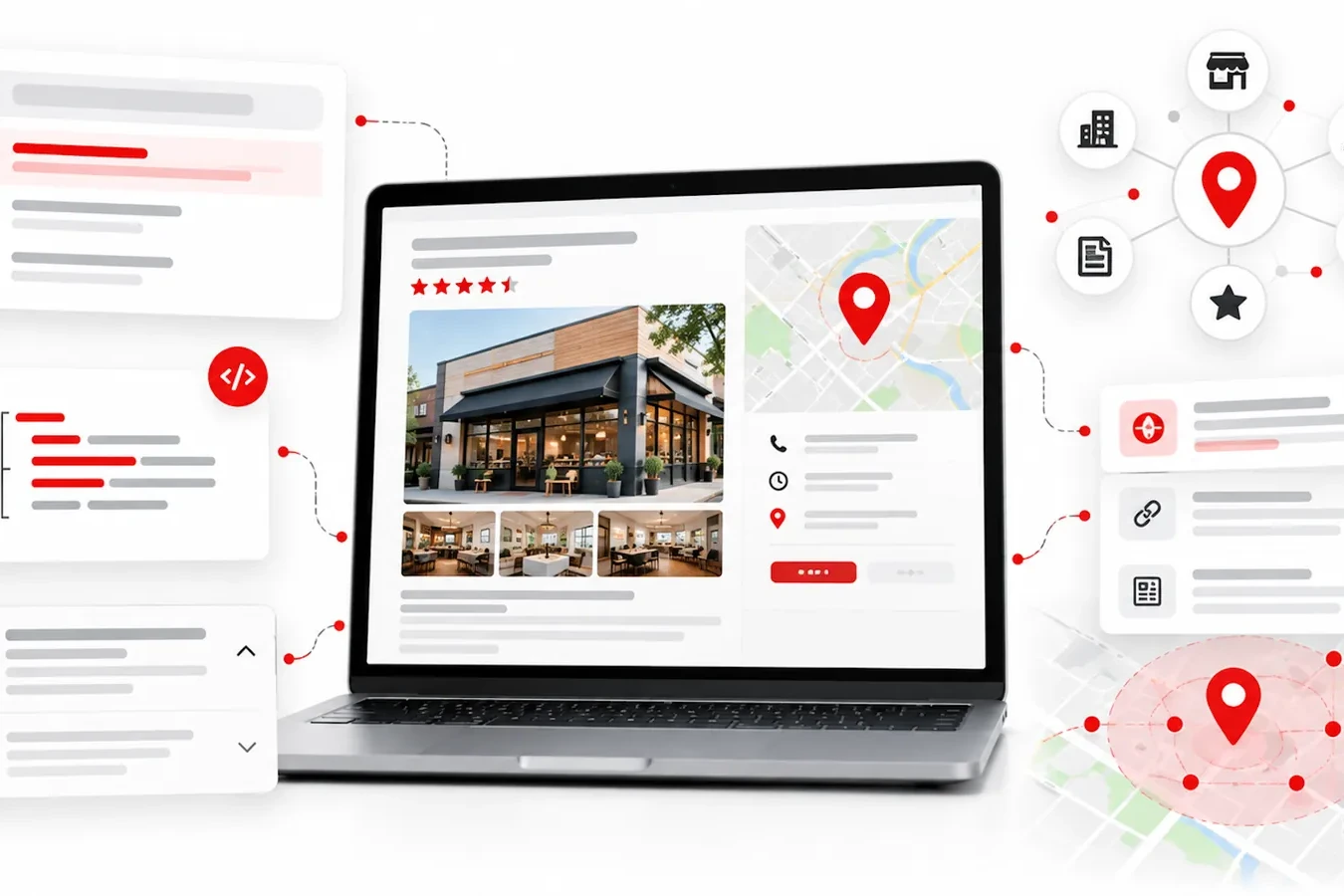
- A complete, accurate Google Business Profile. Choose the most specific primary category (“HVAC contractor,” not “contractor”), add every service you offer, set real service areas and hours, and upload fresh job photos every month. Our GBP optimization checklist walks through every field.
- One page per core service, per core market. “Water heater replacement in Scranton” deserves its own page with a direct answer in the first paragraph, local details, pricing ranges where you can share them, and real FAQs. This is the on-page signal Whitespark’s experts weight highest for AI. See how to build location pages for AI search.
- Consistent facts everywhere. Your name, address, phone, services and service area should match on your website, Google, Bing Places, Apple Business Connect, Yelp, Angi, the BBB and industry directories. AI tools cross-check, and conflicting information erodes confidence.
- Reviews on more than one platform. BrightLocal found consumers now check an average of six review sites, and ChatGPT leans heavily on Yelp. A 400-review Google profile with zero Yelp or BBB presence leaves gaps AI can see.
- Reviews that say something specific. “Great service” gives AI nothing to work with. “Mike replaced our furnace in Clarks Summit the same day it failed” tells AI the service, the town and the outcome. Ask customers to mention what you did and where.
- Structured data. LocalBusiness (or a specific subtype like HVACBusiness or Plumber), Service and FAQPage schema tell crawlers exactly what you do and where, without guesswork.
- Third-party mentions. Features in local news, quotes in trade and lifestyle publications, and inclusion on reputable “best of” lists give AI independent confirmation. Ahrefs found branded web mentions correlate with AI visibility at 0.66 to 0.71 across ChatGPT, AI Mode and AI Overviews, far stronger than raw content volume (Ahrefs, 75,000 brands).
Most home service companies I audit have signal one half-done, signal two missing entirely, and have never thought about signal seven. That’s the opportunity. In most local markets, the bar for being the best-documented company is still low.
How Have Homeowner Review Expectations Changed?
Review standards rose sharply in 2026, and AI raises the stakes further because it summarizes your reputation in a sentence. A 4.2-star average that felt fine three years ago now costs you a meaningful share of homeowners.
Source: BrightLocal Local Consumer Review Survey 2026 (1,002 U.S. adults) and BrightLocal’s AI trust report.
One practical note: when a technician’s name keeps appearing in five-star reviews, that’s not just good for morale. It’s a specific, repeated, verifiable detail, exactly the kind of thing AI uses to describe a company.
How Do SEO, GEO and Digital PR Work Together?
Each discipline covers a different layer of the evidence AI looks for. Running one without the others leaves visible gaps.
Sources: Ahrefs, 863K SERPs; Muck Rack, What Is AI Reading?, May 2026.
The Pest Rangers show what happens when all three run together for years. Organic work helped the company reach 126,000 monthly website visitors, rank for 23,000 keywords and grow revenue more than 5x, while it acquired eight companies and stayed family-owned. Digital PR then put founder Jeff King in front of national audiences, including an expert feature in Martha Stewart and a company profile in USA News. You can read the full story in our pest control digital PR case study.
Across three pest control clients, the combined approach averaged +60% qualified organic traffic and +50% revenue within six months. Those are pest control numbers, but the mechanics are identical for any trade that depends on local trust.
What Should You Do in the Next 90 Days?
Start with the signals you fully control, then build outward. The plan below works for a single-location contractor and scales to multi-location operators.
Expect Google Business Profile and Map Pack movement within 60 to 90 days. Consistent AI recommendations usually build over six to twelve months as reviews, content and mentions accumulate. There is no shortcut that survives, and anyone selling one is selling risk.
If you’d rather have this run for you, our Home Services SEO, GEO & Digital PR program was built for HVAC, plumbing, roofing and other trades, with no long-term contracts and reporting tied to calls and booked jobs. Start with a free audit and see exactly where you stand.
FAQs
How do home service companies get recommended by ChatGPT?
ChatGPT recommends home service companies it can verify across multiple sources. It leans heavily on Yelp and other directories, your website and third-party mentions. BrightLocal found Yelp was the most-cited source in ChatGPT for local businesses, so a strong Google profile alone is not enough.
What is GEO for home service businesses?
GEO, or generative engine optimization, is the work of making AI tools such as ChatGPT, Gemini, Perplexity and Google AI Overviews understand, trust and recommend your business. For contractors, it focuses on service-and-city pages, schema markup, consistent listings, detailed reviews and media mentions.
Does Google Ask Maps change local SEO for contractors?
Yes. Ask Maps, launched in March 2026, answers conversational questions using information from more than 300 million places and reviews from over 500 million contributors. Detailed, recent reviews and a complete profile give it more to work with when it decides which contractors to suggest.
Is my Google Business Profile enough to show up in AI answers?
No. It is essential for Google Maps and Google’s own AI, but local SEO experts weight it at just 12% for AI search visibility, compared with 24% for your website content and 13% each for citations and links, according to Whitespark’s 2026 ranking factors survey.
How many reviews does a contractor need?
Enough to clear consumer thresholds and match your top local competitors. BrightLocal found 47% of consumers won’t consider a business with fewer than 20 reviews, 31% require 4.5 stars or higher, and 74% weight reviews from the last three months most heavily.
How long does it take to show up in AI recommendations?
Profile and on-page fixes can produce Map Pack movement in 60 to 90 days. Consistent AI recommendations usually take six to twelve months, because they depend on reviews, content and third-party mentions accumulating over time.
Last updated on October 29th, 2026 at 08:34 pm