Search engine optimization has been the most effective and compounding lead-generation channel for local businesses for decades, but AI search has now become just as important.
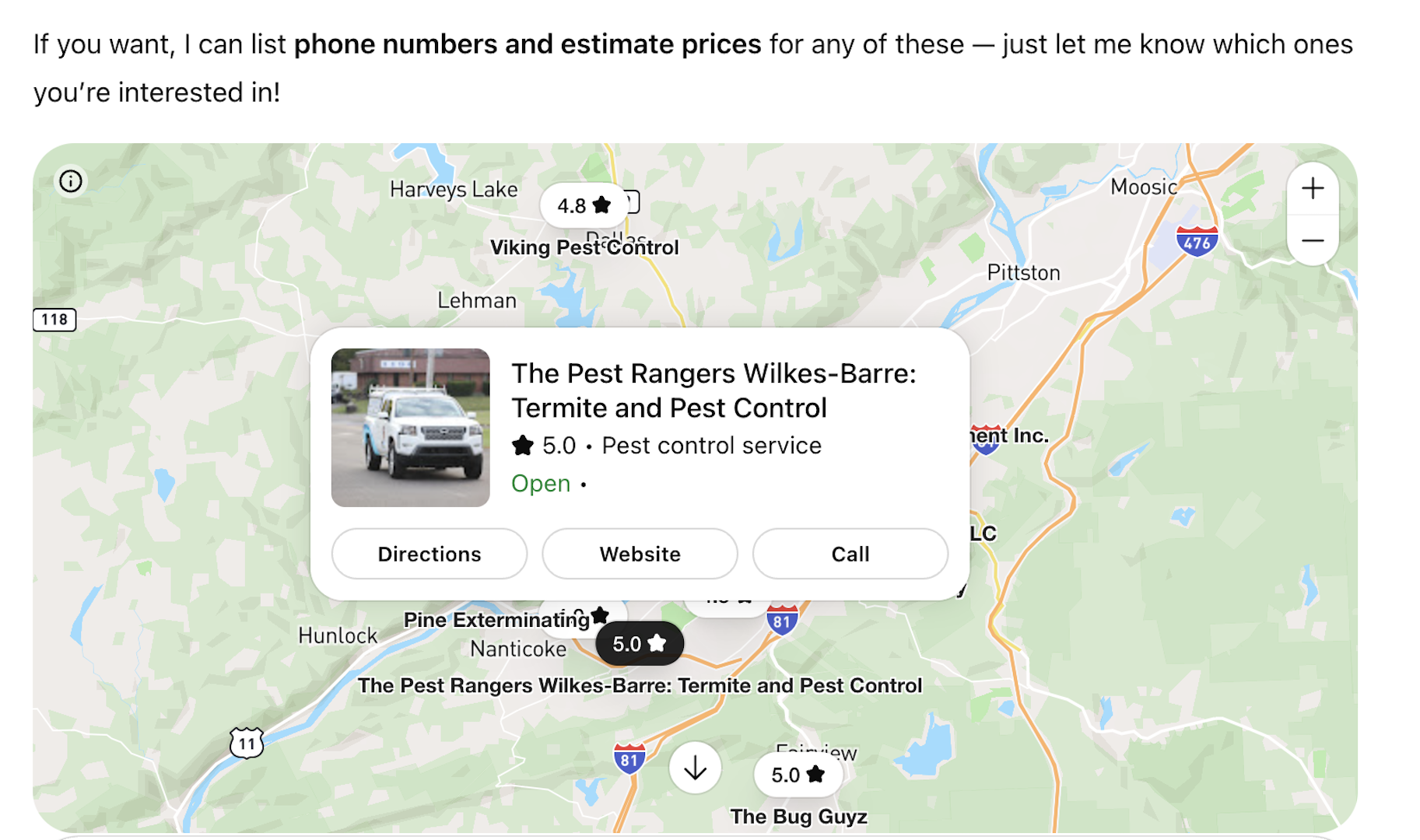
New features like local map results and contextual web queries with click-to-call features inside ChatGPT have made the platform just as powerful as Google for discovering local businesses.
Even Google prioritizes its own AI Overviews for informational and commercial queries using its index to provide faster results.
According to the Wall Street Journal, 5.6% of all search traffic over desktop browsers comes from AI-powered chatbots like ChatGPT and Perplexity.
A large chunk of AI-powered searches is increasingly commercial, prompting advertisers to sink billions into AI advertising over the next four years (Reuters). In just this year, we have witnessed traffic from AI platforms increase by over 1000% for several of our clients in the local pest control industry.
Local SEO is still essential when it comes to Hyperlocal Lead Generation, but marketers need to start looking at Generative Engine Optimization (GEO) and SEO as a 50/50 split when it comes to local digital marketing
Learn more about how Generative Engine Optimization is shaping local search and how service-based businesses can start ranking in AI chatbot indexes and LLMs.
What Is Generative Engine Optimization (GEO)?
Generative Engine Optimization (GEO) is the process of structuring your content so that AI systems cite, summarize, or feature it in generative search results. There are several AI-powered platforms, including Google AI Overviews, ChatGPT answers, and Perplexity, but they generally share many ranking characteristics.
Unlike traditional keyword rankings, GEO focuses on being trusted and selected by AI models as a reliable source of truth. This requires leveraging a wide range of strategies across your content and website, such as:
- Writing concise, factual sections. AI extracts complete thoughts, not long paragraphs.
- Using clear “how” and “why” language. It helps AI detect relevance and intent.
- Adding expertise signals. Cite sources, add author credentials, and show local experience.
- Refreshing often. AI systems prioritize updated, accurate content.
The goal of AI search is to appear as a listed citation within a synthesized answer or to get your brand name listed directly in an answer to a user query.
What Is Search Engine Optimization (SEO)?
Search Engine Optimization (SEO) is the process of improving your website so it ranks higher in traditional search engines like Google or Bing. SEO focuses on keywords, backlinks, and user experience to help users discover your business through organic listings.
Local SEO differs from traditional SEO because businesses can appear in two key areas: standard organic search results and map-based results. These map listings pull from platforms like Google Business Profile and Bing Places, showing business details directly within Google Maps and Bing Maps results, where visibility is driven heavily by location signals, reviews, and profile optimization.
SEO is still the primary channel for local business growth, as an estimated 46% of searches on the platform are locally based (Forbes).
Beyond local SEO, several SEO factors impact search visibility, user experience, and keyword rankings.
- On-page SEO: Optimize titles, headings, and content for target keywords.
- Off-page SEO: Build authority through backlinks and citations.
- Technical SEO: Improve load speed, schema, and mobile usability.
- Local SEO: Optimize your Google Business Profile, reviews, and NAP (name, address, phone) consistency.
GEO vs. SEO: How Do They Compare?
While GEO and SEO are categorically different ways of being discovered, they do share many of the same strategies and should be used in conjunction with one another to give your business the most visibility possible.
| Feature | SEO | GEO |
| Goal | Rank in traditional search results | Be cited in AI-generated summaries |
| Focus | Keywords, links, and technical setup | Structured answers, data accuracy, trust |
| Best For | Organic clicks and traffic | AI visibility and authority |
| Optimization Style | Long-form content with subtopics | Clear, short, fact-based sections |
| Main Platforms | Google Search, Bing, Yahoo | Google AI Overviews, ChatGPT, Perplexity, Copilot |
| Key Success Metric | Organic ranking position | AI citation and inclusion rate |
How Valuable Is AI Search for Local Businesses?
AI search is an essential channel for local businesses as the share of AI searches grows relative to search engines, and people turn to AI chatbots for local answers.
Tools like Perplexity and ChatGPT now offer search queries that compete directly with Google and Bing, providing users with access to products and services online.
Even for chatbot queries, getting a citation or brand mention on these platforms can still be a valuable source of local visibility.
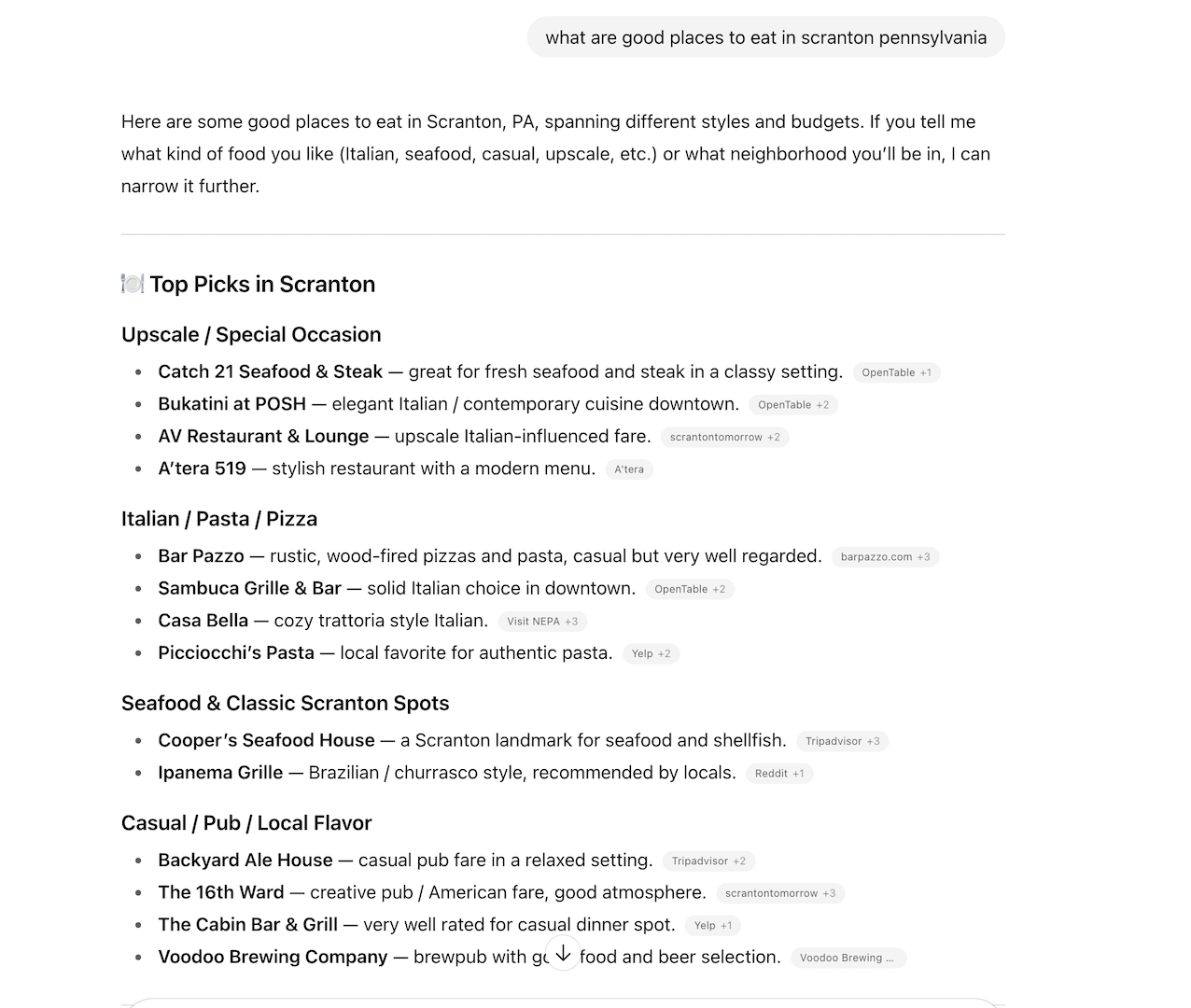
Key Differences: Local SEO vs. GEO
- AI often favors local authority. Small businesses with niche expertise are cited more often than large, generic sites.
- Search results are more conversational. A user might type, “Who’s the best pest control company near Wilkes-Barre?” and get one or two direct business mentions.
- AI recommendations convert faster. Being cited in an AI answer builds trust instantly, whereas Google results still require users to do their own research. AI results are more direct, and users assume they are better vetted.
For these reasons, local businesses cannot ignore the impact that GEO will have in the future.
How Local Businesses Can Start Ranking for GEO Local Search
Local businesses should leverage many of the same SEO best practices to show up in local AI results, with a particular emphasis on building trust signals.
For helpful information on showing up in informative results as a citation or mention, read our guide on How to Show Up in ChatGPT and Generative AI Results.
1. Provide Clear Schema Information
Schema markup (structured data) plays a vital role in helping search engines understand the context of your business and its content across the web.
In terms of AI results, the data is a bit less clear, but chatbots like ChatGPT rely on schema markup to understand local business data, such as reviews, business hours, and other important context. ChatGPT itself verifies this, as evidenced by its heavy reliance on Bing’s index for its web crawlers.
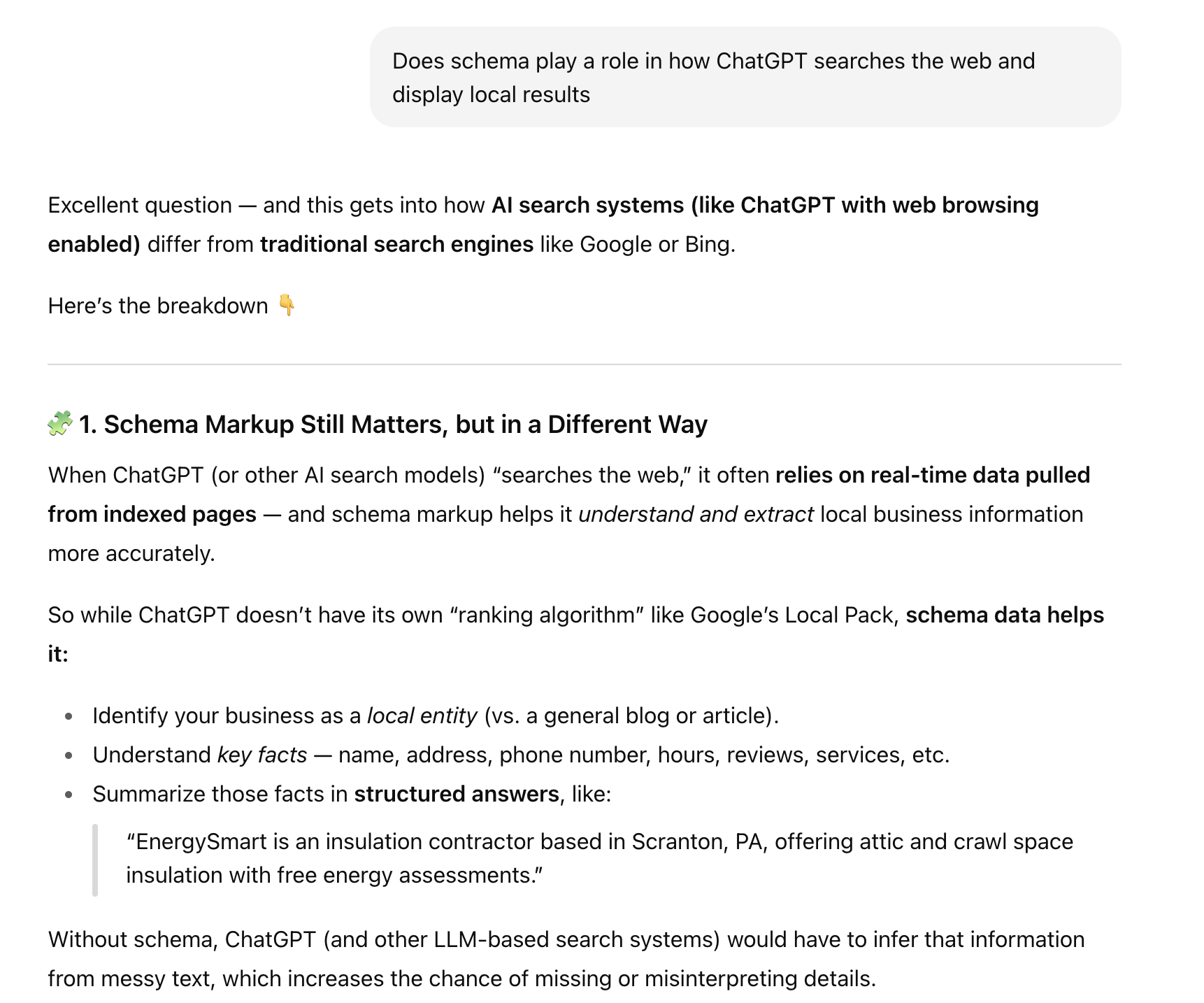
The more specific your structured data, the better it will perform in AI search results. Use schema markup to distinguish the following characteristics of your business and its content:
Local Business: Be specific with NAP information (name, address, and phone number), as this plays a big role in how far you will rank geographically in GEO/SEO results.
Reviews: Encourage specificity and customers to report outcomes. This helps provide actionable data for chatbots to display to users.
Services: Write specific data for all services or products your business provides.
FAQs: Employ FAQs at the end of content and mark with structured data to help increase your chances of showing up in contextualized results and as a citation.
Generally, the more structured data you employ, the higher your chances of ranking in SEO and GEO results.
2. Acquire Backlinks on Relevant Directories
LLMs tend to rely heavily on review aggregate sites and directories for search results, making sites like Yelp, OpenTable, and the Better Business Bureau essential for AI rankings. For example, we searched for the “best contractors in Scranton Pennsylvania,” and many results came from the Better Business Bureau and Yelp.

Since chatbots rely heavily on trusted domains, such as Yelp and the BBB, it’s essential to create active profiles and cultivate reviews on these directories to improve your search visibility.
3. Build Trust with Reviews
The key to ranking well in AI results is building trust.
Since AI platforms like ChatGPT and Perplexity lack sophisticated ranking algorithms, they rely heavily on trust signals, such as Google reviews and directory listings.
In addition to acquiring 5-star reviews, the text of the review itself becomes essential. Encourage users to write detailed, task-oriented information, such as “service was great” or “booking process was instantaneous.”
These contextual signals help reinforce trust in AI chatbots, increasing your chances of ranking in search results in the long term.
4. Provide Detailed, Quotable Content
Whereas traditional search algorithms were advanced enough to rank content using meta tags and limited information, AI chatbots require much more context to understand and rank your content.
The key to ranking content within GEO results is to write with the mindset of creating excratable, quotable information. It’s in the nature of chatbots to provide as clear answers as possible and to mimic human speech.
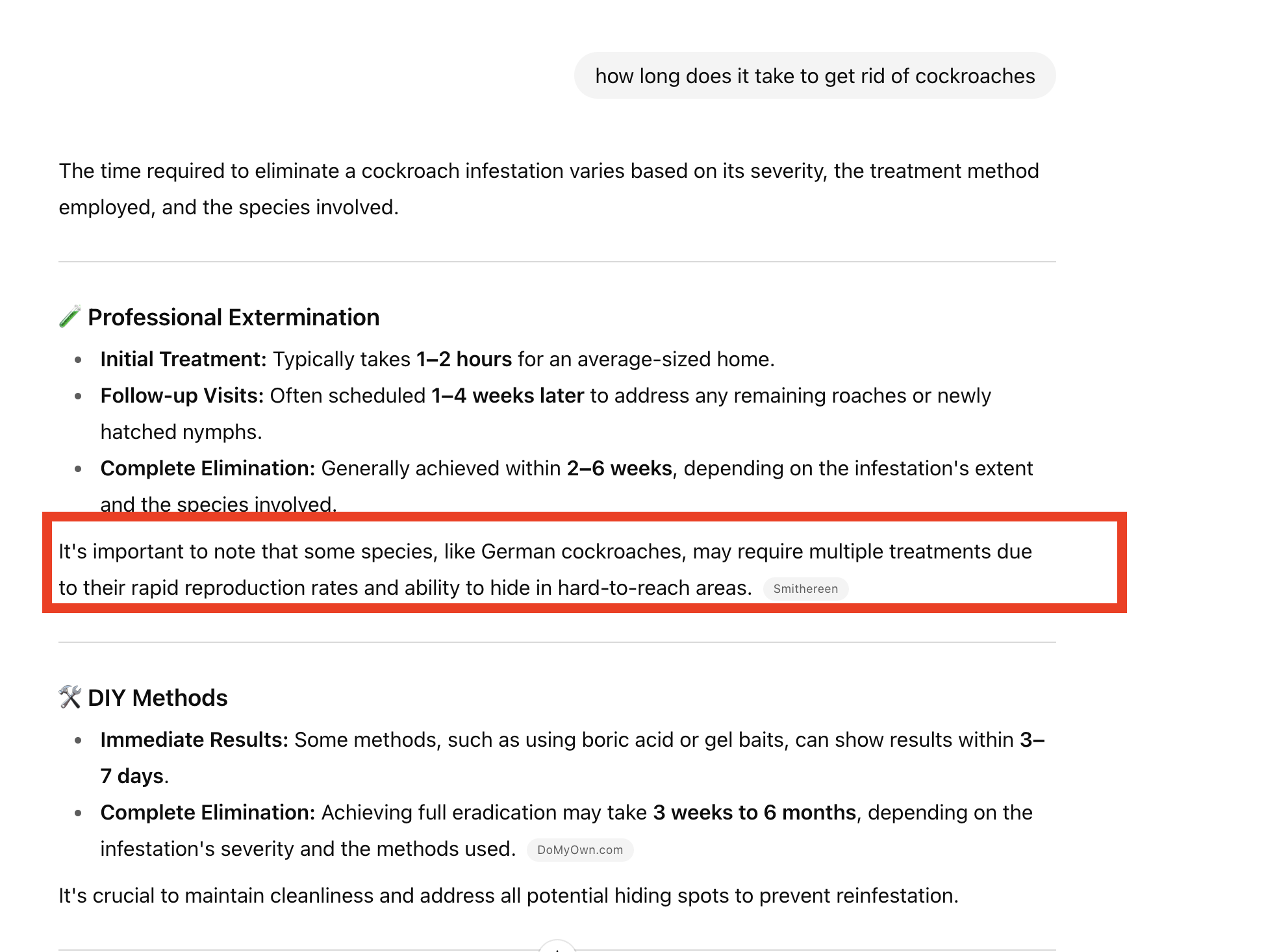
Here are a few examples of how to take traditional content and make it more specific for local GEO results.
Location/Service Information
Example content: Emergency plumbing services available within one hour of contact, within 15 miles of Scranton, Pennsylvania. Services include fixing clogged pipes, leaks, and poor water flow, as well as replacing pipes.
Answering User Questions
Query: What is a pest inspection? “A pest inspection is a detailed check for insects or rodents in your home. It matters because it prevents hidden damage and health issues.”
Providing Structured Content Guides
Example (pest control): A guide on “Rodent Control” should include H2s for: “Signs of Rodents,” “Health Risks,” “Prevention Tips,” and “Professional Treatment Options.”
How to Audit Your GEO Presence
A key, ongoing part of GEO optimization will be auditing your GEO presence and understanding how LLMs interpret it. One way to audit your business using LLMs is to ask chatbots how your business is perceived and which services it can pull from its index.
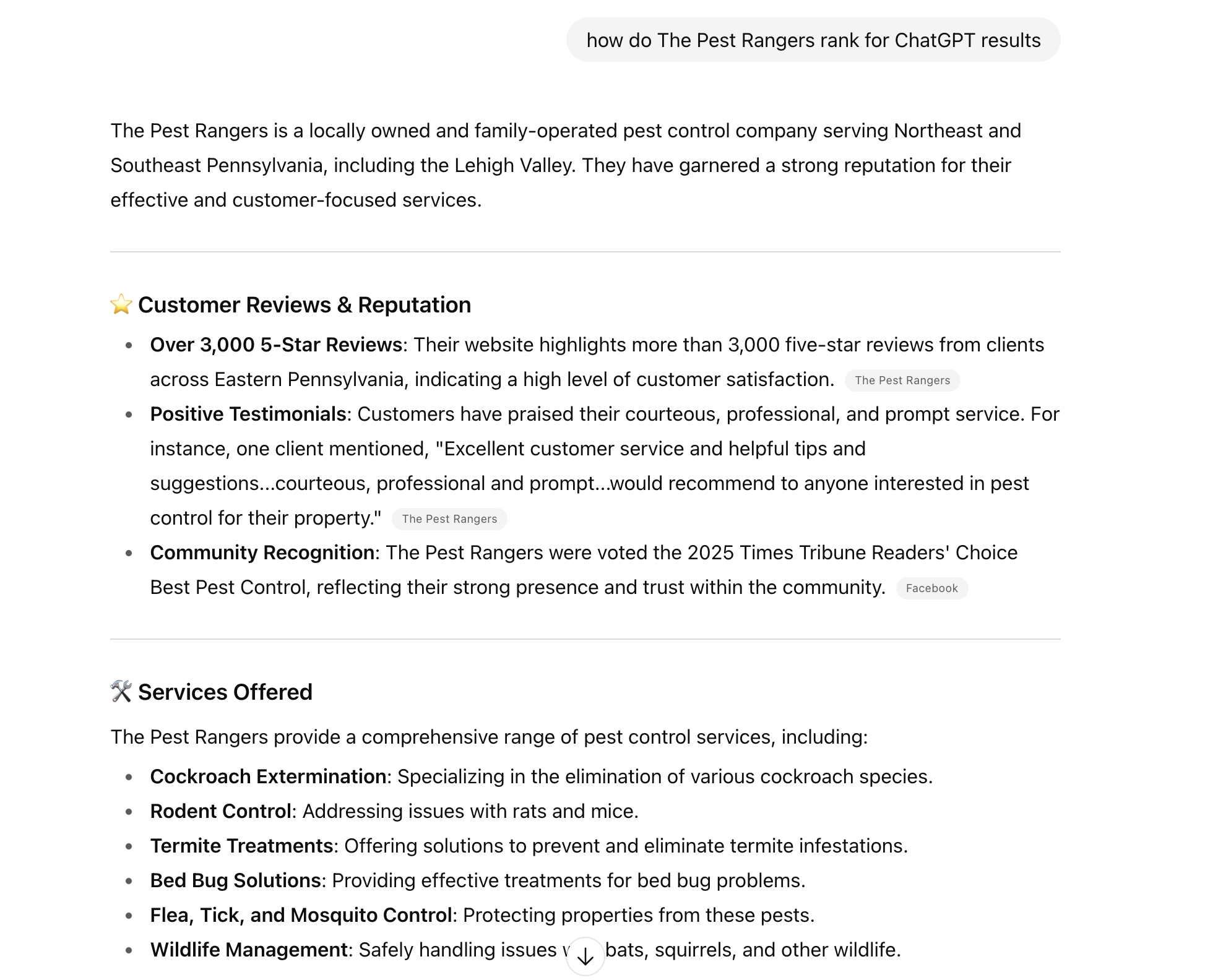
The Temperature Zero Trick offers a more detailed, complex method for extracting LLM data, but for the technical novice, using traditional SEO auditing tools with AI features may be the best strategy moving forward.
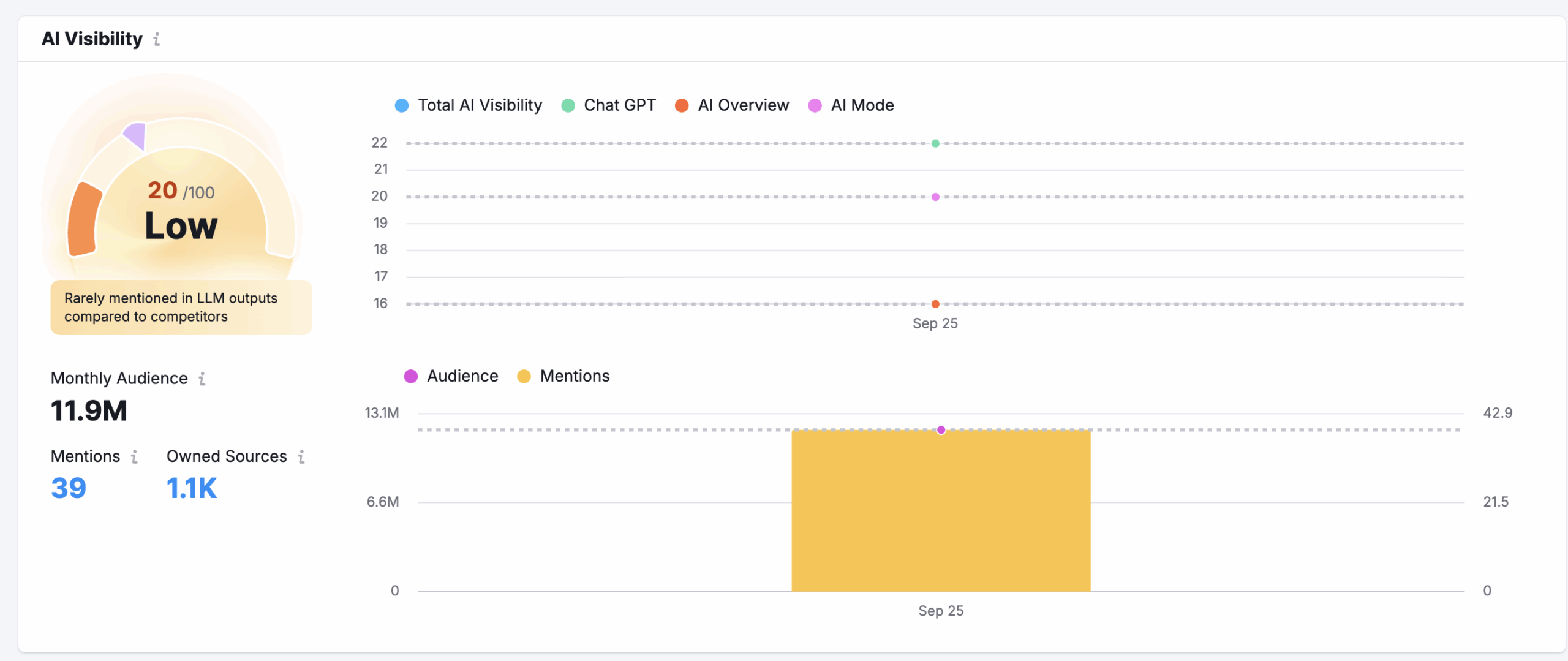
SEMrush provides tools that help you search for specific queries across several chatbots to see where you rank.
Google Analytics 4 lists specific AI platforms as referral sources, showing which platforms users originate from.
Generative Engine Optimization (GEO) is an essential channel for conquering local search and spreading brand awareness. By being proactive with GEO, you can beat the competition and become trusted on these platforms, which will only take up a greater share of SEO traffic moving forward.
FAQs
What does GEO mean in marketing?
GEO stands for Generative Engine Optimization. It’s the practice of improving your content so it appears in AI-powered search responses, not just traditional search results.
Is GEO replacing SEO?
No. GEO builds on SEO. SEO helps your content get found; GEO helps it get featured in AI Overviews and chat responses.
How can a small business use GEO?
Start by structuring your blogs with question-based headings, concise answers, and local expertise. This makes it easier for AI to identify and cite your content.
What tools can help with GEO optimization?
Tools like Google Search Console, ChatGPT, Perplexity.ai, and SurferSEO can help analyze visibility in both traditional and generative search.
How does GEO impact local service businesses specifically?
GEO directly affects how local service businesses are recommended in AI-powered answers. Instead of listing dozens of options like traditional search, AI tools often surface one or two trusted providers, making structured content, reviews, and local authority critical.
Do Google AI Overviews use the same ranking factors as SEO?
Partially. Google AI Overviews still rely on Google’s index, but they prioritize clear answers, entity trust, freshness, and structured data more heavily than traditional blue-link rankings.
Can GEO improve conversions even without website clicks?
Yes. Many AI answers include business names, services, and contact context without requiring a click. Being mentioned directly builds trust faster and can drive calls or branded searches even without a visit.
How often should content be updated for GEO performance?
More frequently than traditional SEO. Updating key pages every 3–6 months with fresh data, clarified answers, and new FAQs increases the likelihood of being re-cited by AI models that favor current information.
Last updated on January 26th, 2026 at 05:25 pm