While search engines and AI have come a long way, they don’t read websites like humans do. They can scan your code and text, but they often struggle to understand the actual meaning without clear, specific directions.
Schema markup solves this gap in machine understanding. It’s a simple layer of code in the <head> tag of your HTML that follows a specific library of standardized tags and properties defined by Schema.org, which categorizes your content by topic.
For example, Product schema can be applied to complex service pages—like a “Self-Directed IRA”—to signal to AI engines that the page offers a specific financial product for purchase or enrollment, rather than just a general blog post.
This structured data enables Google and other search platforms to generate rich results, such as star ratings, and is used to populate AI Overviews.
Beyond traditional SEO, schema is the primary data feed for generative AI systems, including Google’s Gemini, ChatGPT’s search integrations, and Perplexity AI. These platforms rely on structured data to extract information at scale and deliver immediate, accurate answers to users.
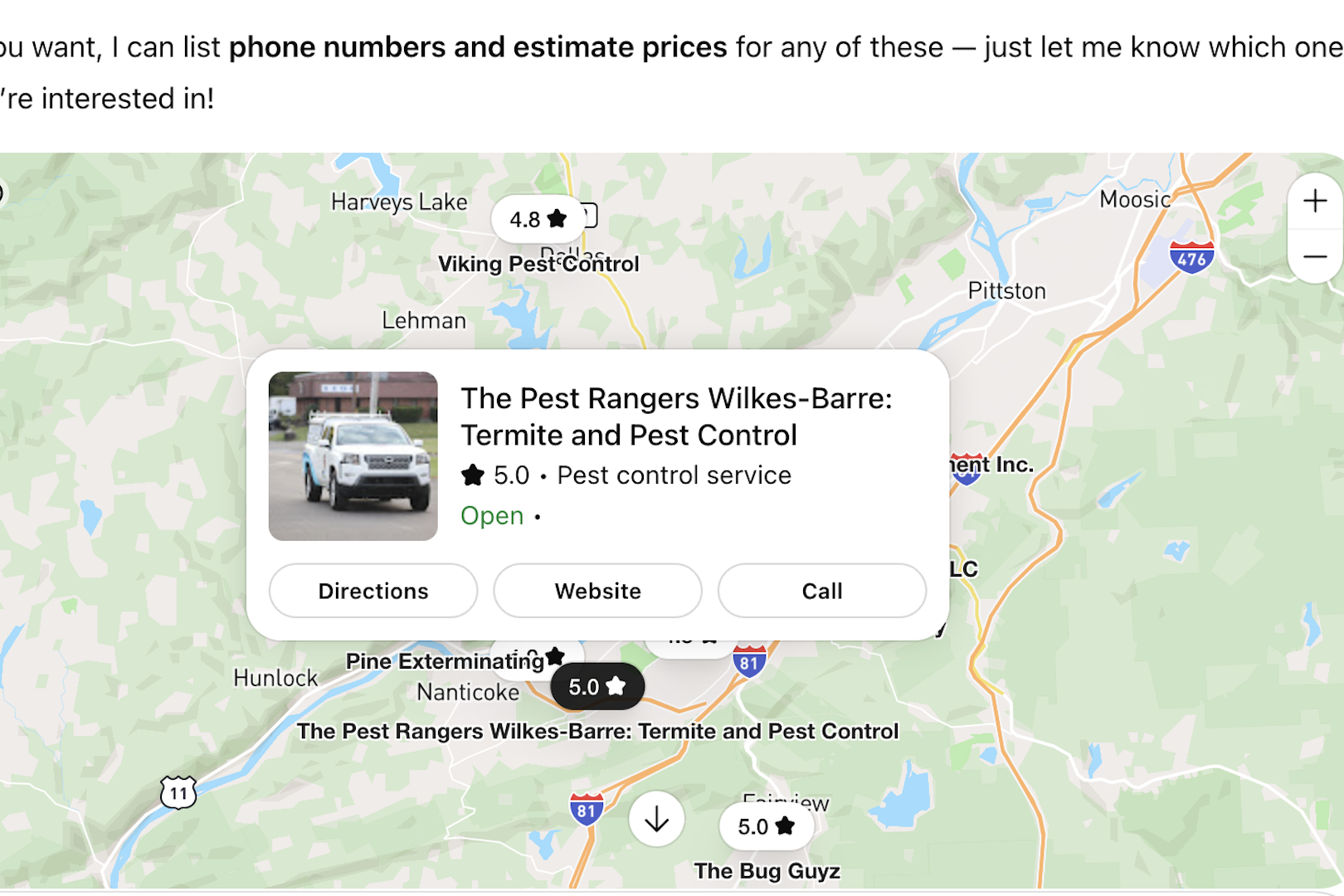
By implementing schema markup at scale for Hyperlocal and Hyperfocused marketing clients, we have successfully secured top placements in Google’s AI Overviews and the top results on ChatGPT. Furthermore, our structured data strategies have directly improved visibility within the Google Map Pack and enhanced traditional organic blue link rankings.
Learn how schema markup works, best practices for implementing it, and what results this simple modification can drive to your business.
What Is Schema Markup?
Schema markup is a form of structured data that serves as a universal language for search engines. While search engines can crawl the text on your website, they often struggle to grasp its precise context.
By implementing specific code from the Schema.org vocabulary, you provide explicit “clues” that categorize your content topically. This allows machines to immediately identify specific entity types, such as Products, Recipes, Events, or Local Businesses, and categorize the content to match specific user-intent searches.

Why Schema Markup Matters for SEO
Schema markup provides search engines and AI user agents with the explicit context needed to index your content accurately and satisfy user intent. This helps distinguish your content geographically (locally vs nationally), commercially (product pages vs. blogs that share keywords), and categorically, such as distinguishing a “Review” of a software tool from the actual “SoftwareApplication” page where a user can download it.
Another primary benefit of schema is the creation of Rich Results, which transform standard blue links into interactive, high-converting assets. By implementing specific markup, your pages become eligible for enhanced SERP features, including:
- Star Ratings & Reviews: Building immediate trust before a user even clicks.
- Pricing & Availability: Displaying real-time “In Stock” status to capture high-intent shoppers.
- Event Details: Highlighting dates, times, and locations directly in search results.
- FAQ Dropdowns: Occupying more “real estate” on the page and answering user queries instantly.
Structured data results, such as site links and review snippets, have been shown to improve click-through rates (CTR) by up to 25%.
For localized SEO, schema is equally indispensable. Local Business markup is a primary signal that feeds the Google Maps Local Pack, ensuring your physical location, operating hours, and contact information are surfaced for “near me” queries.
Research from Search Engine Journal indicates that pages using schema markup rank an average of 4 positions higher than those without it (though this is not considered a direct ranking factor).
Most importantly, schema helps drive visibility across both traditional search engines and AI user chatbots.
How Schema Supports AI Overviews and Generative Search
Schema provides the “machine-readable” layer that allows AI user agents to parse and extract content at scale without expending too many resources on actually reading your content.
AI agents, including ChatGPT, Claude, Google Gemini, and Perplexity, have limited resources for processing and verifying the vast, unstructured data found across the web. Without clear categorization, these models must expend significant computational resources to “guess” a page’s context, increasing the risk of factual errors.
Structured data supports generative search in several key ways:
- Explicit Context for AI Overviews: AI Overviews draw on multiple sources to generate a single, cohesive answer. Schema markup, particularly Article and FAQ types, makes your content easier for AI systems to parse, attribute, and cite.
- Entity Recognition and Disambiguation: When you mark up a person, organization, or product with schema, AI systems recognize it as a distinct “entity” rather than just a string of text. This helps your brand appear in knowledge panels and entity-based summaries across generative platforms.
- High-Intent Data Feeds: Product and Review schema directly populate AI-powered shopping results. These features rely on your structured data to show real-time pricing, availability, and sentiment analysis to users within the AI interface.
- Local Visibility: Modern chatbots like ChatGPT and Google Gemini now offer integrated local search results and maps. By using LocalBusiness schema, you provide these agents with the specific coordinates, service areas, and operating hours they need to recommend your business for “near me” prompts or local AI searches.
According to a 2024 BrightEdge study, approximately 58% of AI Overview results cite sources that use structured data. This means that without schema, your content is significantly less likely to be used as a primary source for the AI-generated answers that now dominate the top of the search results page.
Most Important Schema Types for SEO and GEO
While hundreds of schema types exist within the Schema.org vocabulary, only a select few serve as high-impact signals for search engines and Generative Experience Optimization (GEO).
Focusing on these specific types ensures that both traditional algorithms and AI agents accurately parse your most vital data.
Local Business Schema
This is the foundational requirement for any service-based or brick-and-mortar business. By explicitly defining your name, address, phone number (NAP), operating hours, and service areas, you provide the primary data feed for Google Maps and the Local Pack.
It is one of the most effective ways to ensure your business surfaces for “near me” and location-specific queries.
Article Schema
Designed for blog posts and news content, this markup highlights publish dates, author names, and headlines. Beyond providing clarity, it helps AI engines attribute specific insights to your authorship.
Product Schema
Critical for e-commerce and lead-generation sites, this schema triggers rich results that display pricing, real-time availability, and star ratings. It allows your products to stand out visually in standard search results and ensures they are correctly categorized within AI-powered shopping interfaces.
FAQ Schema
Google frequently leverages this structured data to populate AI Overviews and “People Also Ask” boxes, positioning your site as the immediate solution to user inquiries.
Review Schema
This markup showcases aggregate ratings and individual testimonials directly on the search results page, giving you the coveted star ratings on your search results.
Organization Schema
This defines your brand’s global identity, including your official logo and social media profiles. It is the “source of truth” that helps AI systems connect your website to your broader digital footprint and often influences Knowledge Panels.
Breadcrumb Schema
This markup clarifies your site’s hierarchy for both users and crawlers. It replaces a messy URL string with a clean, navigable path in search results, improving the user experience and helping search engines understand relationships among sections of your content.
How to Add Schema Markup Across Different Website Builders
Whether you are using a specialized CMS or a custom-built site, adding structured data has become increasingly streamlined. Modern platforms often automate basic markup, while plugins and built-in tools offer granular control for advanced SEO and AI optimization.
- WordPress: The most flexible platform for schema. You can use Yoast SEO for automated Article and Organization markup, or Rank Math for a “point-and-click” interface for FAQs and Products. For advanced users, Schema Pro or SEOPress handles complex conditional rules across 20+ schema types. Alternatively, you can use a manual JSON-LD implementation by generating code via Google’s Structured Data Markup Helper and inserting it into your header.
- Shopify: Most themes include native Product schema for pricing and availability. For more comprehensive coverage across blog posts or collections, you can install dedicated apps like JSON-LD for SEO or manually edit your theme’s Liquid files to inject custom scripts.
- Wix: Wix automatically generates a basic schema for core pages. For deeper customization, you can access the Structured Data Markup settings under SEO Tools, which allows you to override defaults or add custom JSON-LD snippets to specific pages.
- Squarespace: Article schema is applied to blog posts by default. To add custom types like Events or Local Business, use the Code Injection feature in the advanced settings to paste JSON-LD code into the site’s header.
- Custom HTML Sites: Without a CMS, implementation is entirely manual. Use Google’s Structured Data Markup Helper to generate the necessary JSON-LD code, then paste it directly into the <head> section of the relevant pages.
To scale your implementation, you can use AI tools such as Google Gemini or ChatGPT to instantly convert unstructured text into valid JSON-LD. For larger sites, SEO plugins like Rank Math or SEOPress offer automated templates that map your content to schema properties, ensuring your brand remains visible and accurately cited in modern generative search results.
How to Validate Schema Markup
After you’ve added your schema, validate it using Google’s Rich Results Test. Enter your URL, and Google shows which schema types it detects and flags any errors.
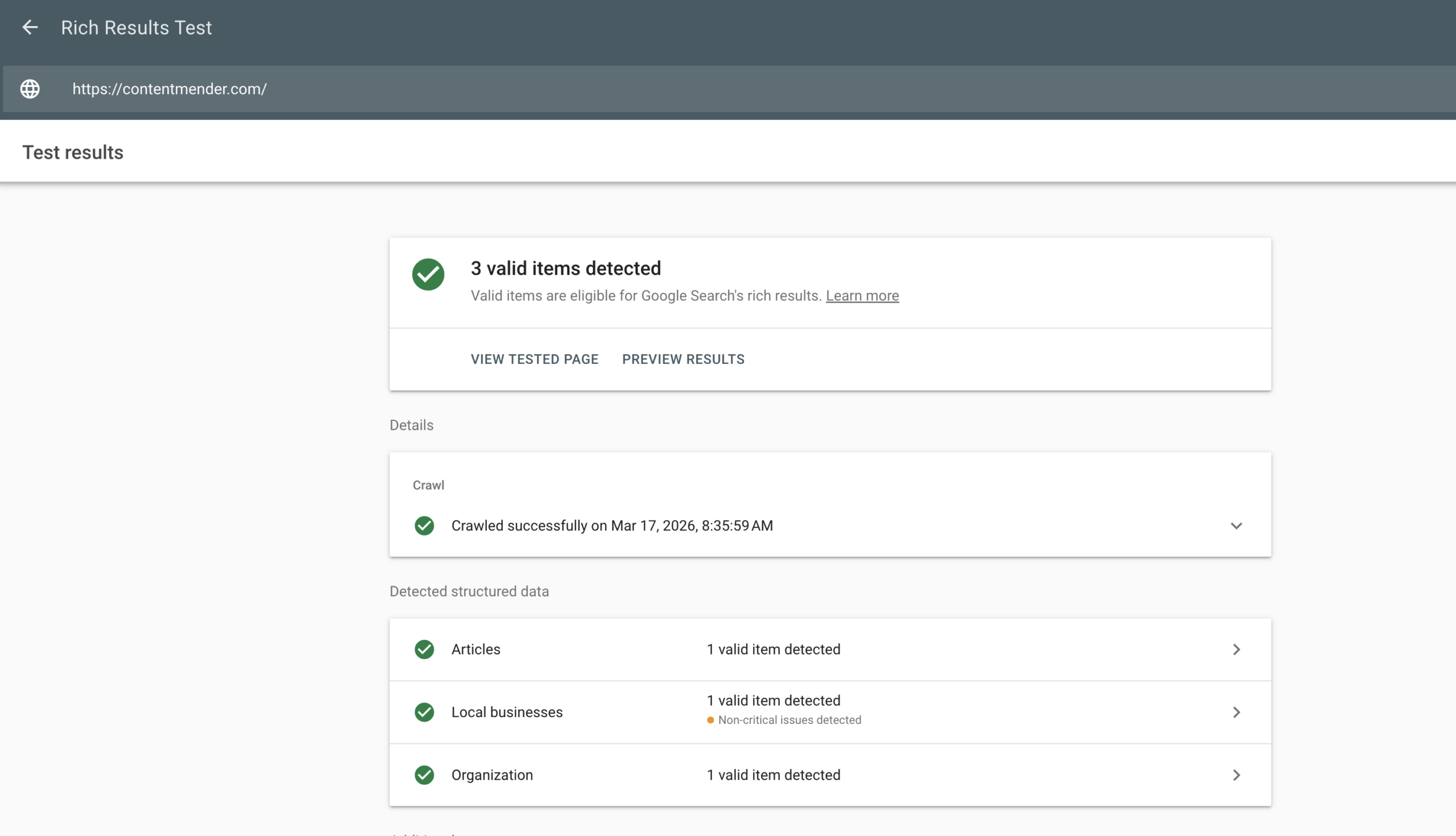 Once your content is live, monitor the “Enhancements” report in Google Search Console to track indexing performance and resolve any required field omissions that could disqualify you from rich results.
Schema markup is an essential layer of SEO and generative engine optimization (GEO) that can improve visibility across both platforms. While not a direct ranking factor, it functions as a high-precision data feed that allows search engines and AI models to accurately fetch, categorize, and prioritize your content.
Ready to future-proof your website for AI-driven search? Contact ContentMender today to implement a high-impact schema strategy for Hyperlocal or Hyperfocused Lead Generation that drives authority and visibility.
FAQs
Does schema markup improve SEO rankings?
Schema doesn’t directly boost rankings, but it creates rich snippets that increase click-through rates. In addition, it helps AI chatbots and search crawlers understand and categorize your content so it ranks for the right search categories and intent.
What is JSON-LD schema?
JSON-LD is a schema format that uses JavaScript notation. Google recommends it because it’s easy to implement and doesn’t affect page HTML.
How do I add schema markup to WordPress?
Use plugins like Yoast SEO, Rank Math, SEOPress, or Schema Pro. These tools let you add schema without coding. Alternatively, insert JSON-LD code manually using a header/footer plugin.
Can I use multiple schema types on one page?
Yes. A single page can include Article, Breadcrumb, FAQ, and Organization schema simultaneously. Just ensure each type is relevant to the page content.
What is Local Business schema?
Local Business schema marks up your company’s name, address, phone number, hours, and service areas. It helps your business appear in Google Maps and local search results.
How do I validate schema markup?
Use Google’s Rich Results Test or Schema.org’s validator. Both tools identify errors and show which schema types are detected on your page.
Does schema help with AI Overviews?
Yes. AI systems prioritize structured data when generating answers. Schema makes your content easier for AI to parse and cite.
What are rich snippets?
Rich snippets are enhanced search results that display additional information like ratings, prices, or event dates. They’re created using schema markup and show up on search engine results pages.
Can AI write schema markup for me?
Yes. Tools like ChatGPT and Claude can generate JSON-LD code based on your content details. Always validate AI-generated schema before publishing to catch errors.