Meta descriptions were never a Google ranking factor. For two decades their only job was earning the click. In AI search they have a second job: they are part of the bait an AI tool reads when it decides which pages to open, quote and cite. A meta description that answers the page’s main question in its first sentence gives ChatGPT, Gemini, Perplexity and Google’s AI features a reason to pick your page over the nine others it retrieved.
I’ve written and edited meta descriptions for more than 17 years, first as an editor, then for the brands and local businesses we serve at ContentMender. For most of that time I treated them as ad copy: worth an hour on the money pages, ignored everywhere else. Watching how AI tools actually pick their sources changed my mind. The same 155 characters we wrote for humans now get read by a machine that’s choosing what to trust.
This guide covers what meta descriptions used to do, how AI search engines retrieve and screen pages, why the description works as bait in that process, and a simple formula, with before-and-after examples, for writing descriptions that answer the question fast.
Were Meta Descriptions Ever a Ranking Factor?
No. Google has said plainly since 2009 that it does not use the meta description in ranking. The tag only ever mattered for how your listing looked, and therefore how many people clicked it.
So the old logic was simple. The description was a pitch, Google ignored it for rankings, and it often swapped your copy for a sentence from the page. That’s why so many sites let plugins auto-generate descriptions or left them blank. On a 300-page site, writing them by hand felt like busywork.
I don’t blame anyone for that call. For a long time it was the right one. Two things changed it: AI tools started searching the web before answering, and those tools read the description long before a person ever sees it.
How Do AI Search Engines Retrieve Information?
AI search engines don’t read the whole web when you ask a question. They break your question into several smaller searches, pull back a short list of results with titles, URLs and snippets, screen that list, open only the pages that look most useful, and then quote the passages that best match each sub-question.
Here’s the process step by step, based on published research into how ChatGPT and Google’s AI features work:
Sources for the steps above: Ahrefs’ guide to retrieval-augmented generation and Ahrefs’ study of 1.4 million ChatGPT prompts.
Step three is the one most marketers miss. According to research Ahrefs cites from AI specialist Dan Petrovic, when ChatGPT retrieves results each one comes back with a title, a brief snippet or summary, a URL and an ID number, and the model screens those before opening anything. Ahrefs calls it “a gatekeeping layer before ChatGPT opens and reads any of your actual page content.”
Most retrieved pages never make it through. In that same 1.4-million-prompt study, ChatGPT ended up citing only about 50% of the URLs it retrieved.
Why Are Meta Descriptions the Bait for AI Search?
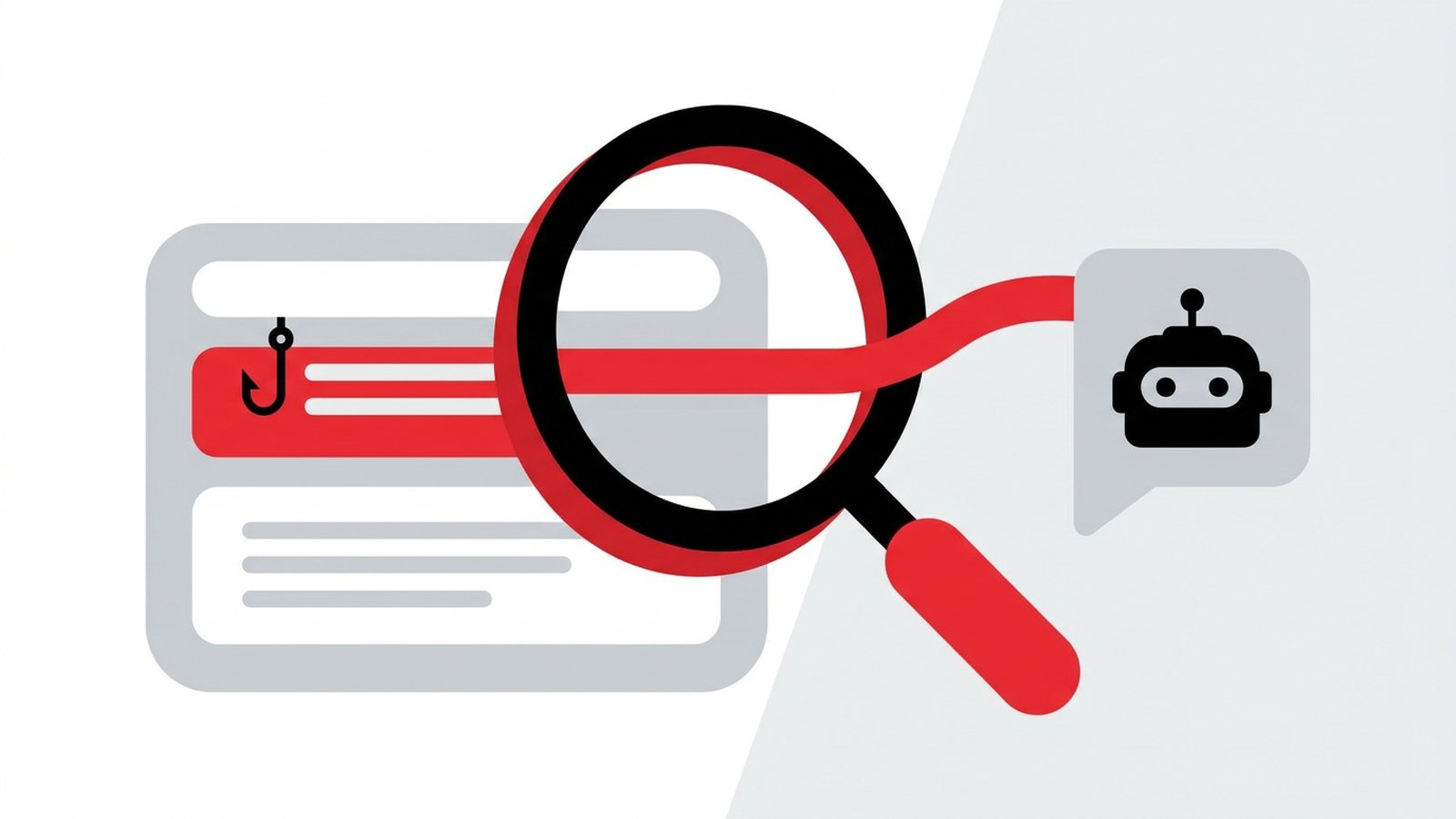
Because at the screening step, the AI has to make a judgment from a few lines of text, and your meta description is the only part of those lines you fully control. It’s the bait on the hook: if it clearly answers the question being asked, the AI bites and opens the page. If it’s vague or salesy, the AI moves on to a result that looks like a better fit.
I want to be straight about the limits here. Nobody outside OpenAI or Google knows exactly how much weight the description carries at the screening step, and Ahrefs itself said its snippet data was too thin to draw strong conclusions. What’s clear is the structure: a short preview gets judged before the page does. Titles matter most in the published data, and the description is the next line of evidence the model reads.
There’s also a practical reason this matters more now. AI tools are pickier than human searchers. A person might click the third result out of curiosity. A model running six sub-queries in parallel is matching text to questions, fast, and it rewards the preview that plainly says “this page answers that.”
How Should a Meta Description Answer the Page’s Question?
Lead with the answer, not the pitch. Every page answers one main question, whether it’s a blog post, a service page or a location page. Your meta description should state that answer in the first sentence, then add the one detail that proves the page goes deeper.
Here’s the formula we use:
- Name the question in plain words. Use the phrasing a customer or an AI sub-query would use, not your internal jargon.
- Answer it in the first sentence. Aim to get the core answer into roughly the first 100 characters, since the rest may be cut off on mobile.
- Add one proof point. A number, a timeframe, a price range, a location, a credential or a count of steps.
- Match the page exactly. The description has to agree with the title, the H1 and the opening paragraph. If they disagree, Google rewrites it and an AI has less reason to trust it.
- Stop around 150 to 160 characters. There’s no hard limit, but Google truncates long snippets to fit the screen.
Then make sure the page backs it up. The description gets the page opened; the opening paragraph gets it quoted. Kevin Indig’s analysis of 1.2 million ChatGPT citations found that the first 30% of a page produced 44.2% of citations, and content written as a question followed by an immediate answer was cited about twice as often (18% vs. 8.9%), according to Ahrefs’ summary of the research. The bait and the hook have to match.
That’s the same pattern we use on every ContentMender page and post: a bolded one-paragraph answer up top, then the detail. The meta description is simply the shortest version of that answer.
What Do Good and Bad Meta Descriptions Look Like?
The difference is usually the first ten words. Bad descriptions open with the brand or a slogan. Good ones open with the answer.
The examples are illustrative, so swap in your real numbers, ratings and service areas. Never invent a stat for a description; if an AI quotes it and a customer checks it, the mismatch costs you trust you can’t easily earn back.
Notice what the strong versions have in common. Each one names the job, gives a specific detail an AI can match to a sub-question (“same-day,” “$5,000 to $12,000,” “free re-treatments”), and sounds like an answer instead of an ad. They also still work for humans, which matters because Google still shows descriptions on a meaningful share of searches.
Which Meta Description Mistakes Hurt AI Visibility?
Most of the damage comes from descriptions that are missing, duplicated or disconnected from the page.
- Leaving it blank. Google, Bing and AI tools will build a preview from whatever text they find first, which on many sites is navigation, a cookie notice or a promo banner.
- Duplicating descriptions. Google’s own guidance says identical or similar descriptions across pages aren’t helpful. Twenty location pages with the same description give an AI no reason to prefer one over another.
- Writing slogans. “Excellence in every project” matches no question anyone asks.
- Stuffing keywords. Google says descriptions made of long keyword strings are less likely to be shown. Models match meaning, not repetition.
- Promising what the page doesn’t deliver. If the description says “pricing” and the page has no prices, the page fails at the chunk-matching step anyway.
- Blocking snippets by accident. Google says a page must be eligible to show a snippet to appear as a supporting link in AI Overviews or AI Mode. A stray nosnippet or tight max-snippet setting can keep you out (Google Search Central).
One more technical point: AI crawlers have to be able to reach the page at all. OpenAI says sites need to allow OAI-SearchBot for content to be included in ChatGPT search summaries and snippets (OpenAI Help Center). We’ve found firewalls and security plugins blocking AI crawlers on client sites more than once.
How Do You Audit and Rewrite Meta Descriptions for AI Search?
Start with the pages that earn money or already get impressions, not the whole site. A focused pass on 20 to 50 pages usually covers most of the value.
Treat AI tracking like a trend line, not a scoreboard. Answers change from one run to the next, so look for direction over several months instead of celebrating or panicking over one result. BrightLocal found that 45% of consumers used AI tools for local business recommendations in 2026, up from 6% a year earlier (BrightLocal), so the trend is worth measuring even if the individual readings are noisy.
If you’d rather have this done for you, it’s part of the on-page work in our Hyperfocused Lead Generation program for larger brands and our Hyperlocal Lead Generation program for local service businesses. For the title side of the equation, see our guide to SEO title tags and meta descriptions, and for the bigger picture, how to optimize content to rank in AI searches. Or start with a free audit and we’ll show you which of your pages AI tools are skipping.
FAQs
Are meta descriptions a Google ranking factor?
No. Google has stated since 2009 that it does not use the meta description in ranking. It can still affect clicks, and it now plays a role in how AI search tools screen and represent pages.
Do ChatGPT and other AI tools read meta descriptions?
AI search tools judge results from a short preview, usually a title, URL and snippet or summary, before opening pages. Ahrefs reports that title, meta description and URL help decide which pages get read in full, and that the meta description can appear in ChatGPT’s source list.
How long should a meta description be in 2026?
Aim for roughly 150 to 160 characters and put the core answer in the first 100 or so. Google has no hard limit but truncates snippets to fit the device.
Why does Google rewrite my meta descriptions?
Google rewrites descriptions when it thinks page text matches the search better. Portent found page-one descriptions were rewritten 71% of the time on mobile. Answer-first descriptions that match the page’s H1 and opening paragraph are more likely to be used.
Should every page have a unique meta description?
Yes, at least for pages that earn traffic or leads. Google’s guidance says identical or similar descriptions aren’t helpful, and duplicates give AI tools no reason to prefer one of your pages over another.
What’s the fastest way to improve meta descriptions for AI search?
Pick your 20 to 50 most important pages, write the one question each page answers, then rewrite each description to answer it in the first sentence with one proof point. Make sure the page’s opening paragraph gives the same answer.
Last updated on November 5th, 2026 at 06:36 pm